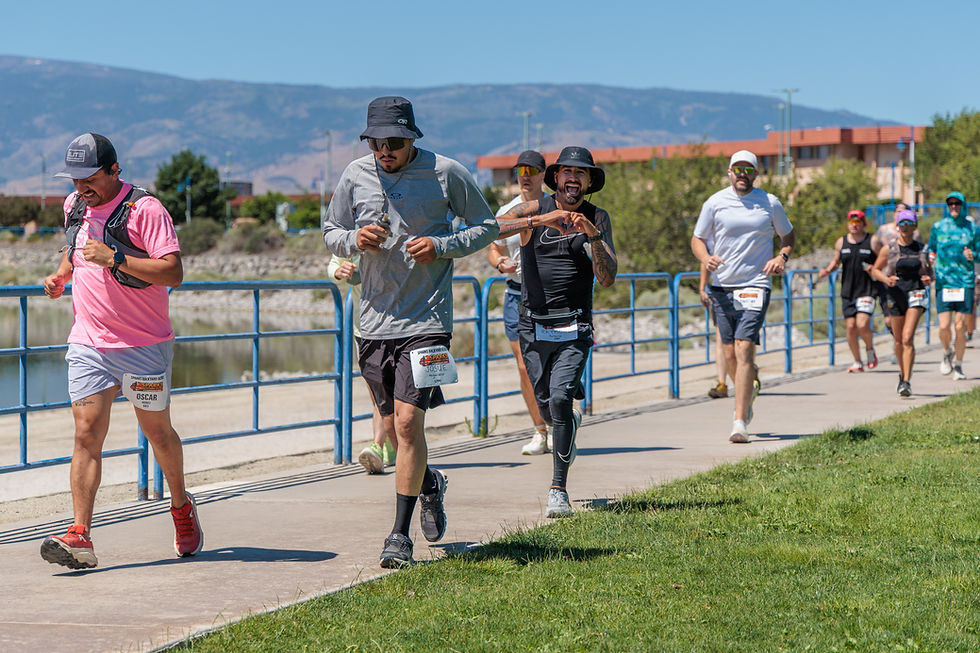
Your First Ultramarathon: An Absolute Beginner's Guide to Training

So you're thinking about tackling your first ultramarathon? Whether you're eyeing the Sparks Backyard Ultra in June 2026 or the Sparks Biggest Little Ultra in October 2026, we're here to tell you something important: you can do this.
Ultramarathons aren't just for elite athletes with perfect form and lightning-fast paces. They're for walkers, joggers, runners, and everyone in between who wants to challenge themselves and discover what they're truly capable of. Let's break down how to get started, no matter where you are in your fitness journey.
Understanding What You're Getting Into
First, let's talk about what makes an ultramarathon different. Any race longer than the traditional 26.2-mile marathon counts as an "ultra." The Sparks Backyard Ultra has a unique format where you complete a 4.167-mile loop every hour, on the hour, for as long as you can keep going. The Biggest Little Ultra offers various distance options and fixed time options, giving you flexibility in choosing your challenge.
The beauty of ultras? They're less about speed and more about endurance, strategy, and mental toughness. Many participants walk significant portions of their race, and that's completely valid and respected in the ultra community.
Building Your Base: Where to Start
If you're currently inactive or new to distance running and walking, start with building a solid base.
Newcomers in Months 1-2: Establish Consistency
Aim for 3-4 days per week of activity
Start with 20-30 minutes of walking or easy jogging
Focus on time on your feet, not pace or distance
Include rest days—they're when your body gets stronger
Newcomers in Months 3-4: Gradual Progression
Increase one long session each week
Add 10-15 minutes to your longest outing every 1-2 weeks
Maintain your shorter midweek sessions
Listen to your body and scale back if you feel persistent fatigue
Creating Your Training Plan
For the June Backyard Ultra, you'll want to start training by January at the latest. For the October Biggest Little Ultra, beginning in April, May, or even June gives you ample time.
The Long Session
Your weekly long walk or run is the cornerstone of ultra training. This is where you build the physical and mental endurance needed for race day. Start wherever you are, even if that's just 45 minutes, and build gradually. By race day, you should be comfortable with many more hours on your feet.
Back-to-Back Training
One powerful technique is doing moderate sessions on consecutive days. This teaches your body to perform while fatigued, mimicking race conditions. Try a longer session on Saturday and a moderate one on Sunday.
Cutback Weeks
Every 3-4 weeks, reduce your volume by 30-40% for a week. This allows your body to recover and adapt to the training stress. You'll come back stronger.
Cross-Training
Swimming, cycling, yoga, and strength training all support your ultra goals. They build overall fitness while giving your running and walking muscles a break. Core strength, in particular, becomes crucial in the late miles of an ultra.
The Mental Game
Ultra training is as much mental as physical. Here's how to prepare your mind:
Practice Race Conditions
Train at the times of day you'll be racing
Practice eating and drinking while moving
Do some training sessions when you're tired or don't feel like it
Experiment with music, podcasts, or silence
Develop Mantras
When things get tough, you'll need positive self-talk. Practice phrases like "I am strong," "One step at a time," or "I've trained for this."
Visualize Success
Spend time imagining yourself on race day, pushing through difficult moments, and crossing the finish line. Your brain doesn't fully distinguish between visualization and reality, so you're building confidence with each mental rehearsal.
Nutrition and Hydration
You can't train your way out of poor fueling. Start experimenting early.
During Training: Test different foods and drinks on your long sessions. What works for others might not work for you.
Types to Try: Energy gels, chews, bars, real food like sandwiches, bananas, pretzels, and boiled potatoes are all common ultra fuel.
Hydration Strategy: Practice drinking regularly rather than waiting until you're thirsty. Consider electrolyte supplements for sessions over 90 minutes.
Gut Training: Your digestive system needs training too. Gradually increase your intake during exercise so your stomach adapts.
Gear Essentials
You don't need expensive equipment, but a few items make a real difference:
Shoes: Get properly fitted at a running store. Replace them every 300-500 miles.
Socks: Invest in moisture-wicking socks to prevent blisters.
Clothing: Avoid cotton. Choose fabrics that manage moisture.
Headlamp: Essential if you'll be moving in darkness. However at the Sparks Marina there will be light all night.
Pack, vest, or other personalized setup: For carrying nutrition, water, and layers during training and racing. Some racers prepare a tacklebox of necessities to use at race time. It is important to try what works for you.
Finding Your Community
Training for an ultra can feel isolating, but it doesn't have to be. Look for local running or walking groups, join online communities, or recruit a friend to train alongside you. The ultra community is famously welcoming and supportive, everyone remembers being a beginner. Follow us on social media to watch for running clubs and others who may be in your area. (Instagram and Facebook)
Common Mistakes to Avoid
Doing Too Much, Too Soon: The biggest training error is ramping up volume too quickly. Be patient with yourself.
Skipping Rest: Rest days aren't laziness; they're strategic. Your body needs time to adapt.
Ignoring Small Injuries: That "minor" ache can become a major problem. Address issues early with rest, ice, or professional help.
Comparing Yourself to Others: Your journey is yours alone. Someone else's pace or mileage is irrelevant to your success.
You Belong Here
Here's the truth about ultramarathons: the community doesn't care about your pace, your body type, or whether you run, walk, or do both. What matters is that you show up, put in the work, and refuse to quit on yourself.
Whether you choose the Sparks Backyard Ultra or the Biggest Little Ultra, you're embarking on a journey that will teach you about perseverance, resilience, and your own untapped potential. Start where you are, train consistently, and trust the process. The starting line is waiting for you. We can't wait to see you there.